Healing after breast cancer surgery is about so much more than the incision. The way your body recovers in the first few months can influence your long-term mobility, comfort, and even your risk of complications like clinical lymphedema.
That’s why understanding what’s happening inside your body, and knowing how to support your healing, is so important. My goal with this blog is to give you the clear, practical information most survivors aren’t told, so you can navigate this stage with confidence.

Why the First Few Months Matter So Much
Breast surgery is often necessary and lifesaving, but it can leave lasting effects: scar tissue, reduced mobility, decreased lymphatic function, and changes in posture or movement patterns. Left unaddressed, these can contribute to chronic pain or lymphedema down the road.
The good news? You have a powerful window—especially the first 3 months, and up to 9 months—to support healing, restore movement, and protect your lymphatic system. Rehab is crucial here, but unfortunately only 2–5% of patients are referred to oncology rehab. Nearly everyone could benefit.
My hope is that my resources can fill in those gaps and help you care for your body intentionally during this important stage.
While the first few months are an optimal window for intervention, it is truly NEVER too late to start.
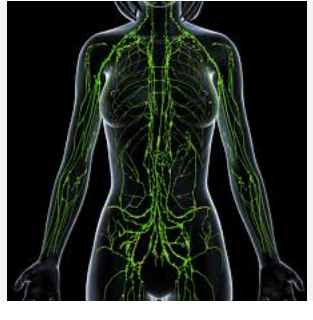
Breast Surgery and Your Lymphatic System
Most breast cancer surgeries involve lymph node removal, either through a Sentinel Lymph Node Biopsy (SLNB) or an Axillary Lymph Node Dissection (ALND). When lymph nodes are removed, the lymph system works at a lower capacity.
At the same time, surgery creates inflammation. That’s a completely normal part of healing, but it also creates extra fluid that the lymph system must process.
So you’re dealing with:
- A system functioning at reduced capacity
- A higher-than-normal fluid load
That combination can stress the lymphatic system, unless you intentionally support it during recovery. With the right approach (movement, breathwork, manual lymph drainage, posture training, etc.), you can help your lymphatic system recover and reduce your long-term risk of lymphedema.
Common Post-Surgery Issues to Be Aware Of
This isn’t meant to scare you; knowledge truly is power. If you spot an issue early, it’s much easier to treat.
Seroma
A pocket of fluid that can develop in the area where tissue was removed. Some resolve naturally; others need aspiration. A growing seroma often means you’re doing too much too soon.
Cording (Axillary Web Syndrome)
Feels like tight “guitar strings” in the arm or armpit. Very common. Some cords resolve naturally, but others need rehab. Because lymphatic cording may indicate lymphatic stress, don’t ignore it.

Capsular Contracture
Relevant if you have implants or tissue expanders. If the capsule becomes too tight, you may notice pain, tightness, or the implant shifting upward. Tell your surgeon if you notice these changes. Treatment options exist.
Lymphedema
Swelling caused by a buildup of lymph fluid. The key is early detection.
Stages 0 and 1 are reversible, so catching lymphedema early can prevent it from becoming a chronic condition.
Biggest ways to reduce risk:
- Work within your lymph system’s capacity
- Exercise (appropriately for your phase of healing)
- Monitor for early signs
- Maintain healthy weight
- Wear compression for air travel or strenuous activity
- Practice manual lymph drainage
- Prioritize skin care and infection prevention
How to Support Your Healing in the Early Weeks
1. Listen to Your Lymphatic System
Your body will tell you when it’s overwhelmed. Watch for:
HAFNT:
- Heaviness
- Aching
- Fatigue
- Numbness
- Tingling
If you feel these in the affected limb, back off your activity and let your system recover.

2. Start With Gentle, Purposeful Movement
Exercise is one of the best tools you have. Early on, stick to therapeutic exercises designed for post-operative recovery, like the programs I offer at Pink Badger. These help restore posture, mobility, breathing mechanics, and lymphatic flow.
3. Pay Attention to Posture
After surgery, it’s common to guard or “clamp” the arm against the body. Over time, this can restrict lymph flow and create new movement problems. Check in with your posture frequently and aim for gentle, comfortable movement within your surgeon’s guidelines.
4. Consider Compression
A sleeve + gauntlet (when properly fitted) can help manage swelling and may reduce lymphedema risk, especially in the early weeks. Compression bras may also be recommended depending on your surgery type.

5. Fuel Your Body Well
Hydration, anti-inflammatory foods, and adequate protein make a big difference when your body is healing. Think:
- Water (at least half your body weight in ounces per day)
- Fruit, leafy greens, nuts, salmon
- Fewer processed or sugary foods
6. Manual Lymph Drainage
MLD supports a system that’s temporarily overwhelmed. You can learn to do self-MLD daily once your surgeon clears you. You can view my Manual Lymphatic Drainage Handout to learn how to do it appropriately.

7. Manage Scars Early
Scar tissue doesn’t just affect appearance- it can restrict movement and trap lymph fluid. Scar massage and silicone sheets can help, once cleared by your surgeon.
You can view my Surgical Scar Management Handout to learn how to do this.
Helpful Tips for the Early Weeks at Home
- Stock your freezer with anti-inflammatory, protein-rich meals.
- Bring a pillow for the car ride home—your chest will thank you.
- Sleep elevated with a wedge or in a recliner.
- Wear button-up shirts and loose pants.
- Use a drain pouch. Don’t trust your pockets.
- Manage constipation with hydration, fiber, movement, and proper positioning.
- Try non-medication pain strategies like deep breathing and gentle movement.
- Give yourself permission to grieve. Surgery changes your body, and it’s okay to feel a lot of feelings about that.
When to Consider Therapy
If possible, see a specialized PT or OT with training in oncology and lymphedema—designations like CLT, CLT-LANA, OCS Oncology, or PORi Certified Breast Cancer Rehab Specialist. These therapists understand the nuances of breast cancer recovery and can help you prevent long-term issues.
You Deserve Support Through This
Breast surgery recovery can feel overwhelming, but it doesn’t have to be. With the right knowledge and the right tools, you can support your body through healing and set yourself up for long-term strength and function.
If you’re unsure where to start or want structured support, I’m here for you.
If you want more guidance through those first weeks of healing, you can download my free Breast Surgery Recovery Program. It includes everything you need to know plus a 6-week, phase-based exercise program to help you move safely and confidently after surgery.
And remember, it’s NEVER too late to start healing.

References:
Baumann, F.T., Reike, A., Reimer, V. et al. Effects of physical exercise on breast cancer-related secondary lymphedema: a systematic review. Breast Cancer Res Treat 170, 1–13 (2018). https://doi.org/10.1007/s10549-018-4725-y
Brown, Jessica & Hipp, Maria & Shackelford, Daniel & Hayward, Reid. (2019). Evaluation of an Exercise-Based Phase Program as Part of a Standard Care Model for Cancer Survivors. Translational Journal of the American College of Sports Medicine. 4. 10.1249/TJX.0000000000000082.
Buffart LM, et al. Effects and moderators of exercise on quality of life and physical function in patients with cancer: An individual patient data meta-analysis of 34 RCTs. Cancer Treat Rev. 2017 Jan;52:91-104. doi: 10.1016/j.ctrv.2016.11.010. Epub 2016 Dec 5. PMID: 28006694.
De Groef,et al. (2015). Effectiveness of Postoperative Physical Therapy for Upper-Limb Impairments After Breast Cancer Treatment: A Systematic Review. Archives of physical medicine and rehabilitation. 96. 10.1016/j.apmr.2015.01.006.
Gençay Can, A. et al Early Detection and Treatment of Subclinical Lymphedema in Patients with Breast Cancer. Lymphatic Research and Biology, Volume 17, Issue 3, June 13, 2019. https://doi.org/10.1089/lrb.2018.0033
Osborne, Julia. Foundation in Oncology Rehabilitation [Course Manual] Physiological Oncology Rehabilitation Institute.
Osborne, Julia. Breast Cancer Rehabilitation [Course Manual] Physiological Oncology Rehabilitation Institute.
Rikki A Cannioto, et al. Physical Activity Before, During, and After Chemotherapy for High-Risk Breast Cancer: Relationships With Survival, JNCI: Journal of the National Cancer Institute, Volume 113, Issue 1, January 2021, Pages 54–63, https://doi.org/10.1093/jnci/djaa046
Stout NL, et al. Toward a National Initiative in Cancer Rehabilitation: Recommendations From a Subject Matter Expert Group. Arch Phys Med Rehabil. 2016 Nov;97(11):2006-2015. doi: 10.1016/j.apmr.2016.05.002. Epub 2016 May 27. PMID: 27237580.